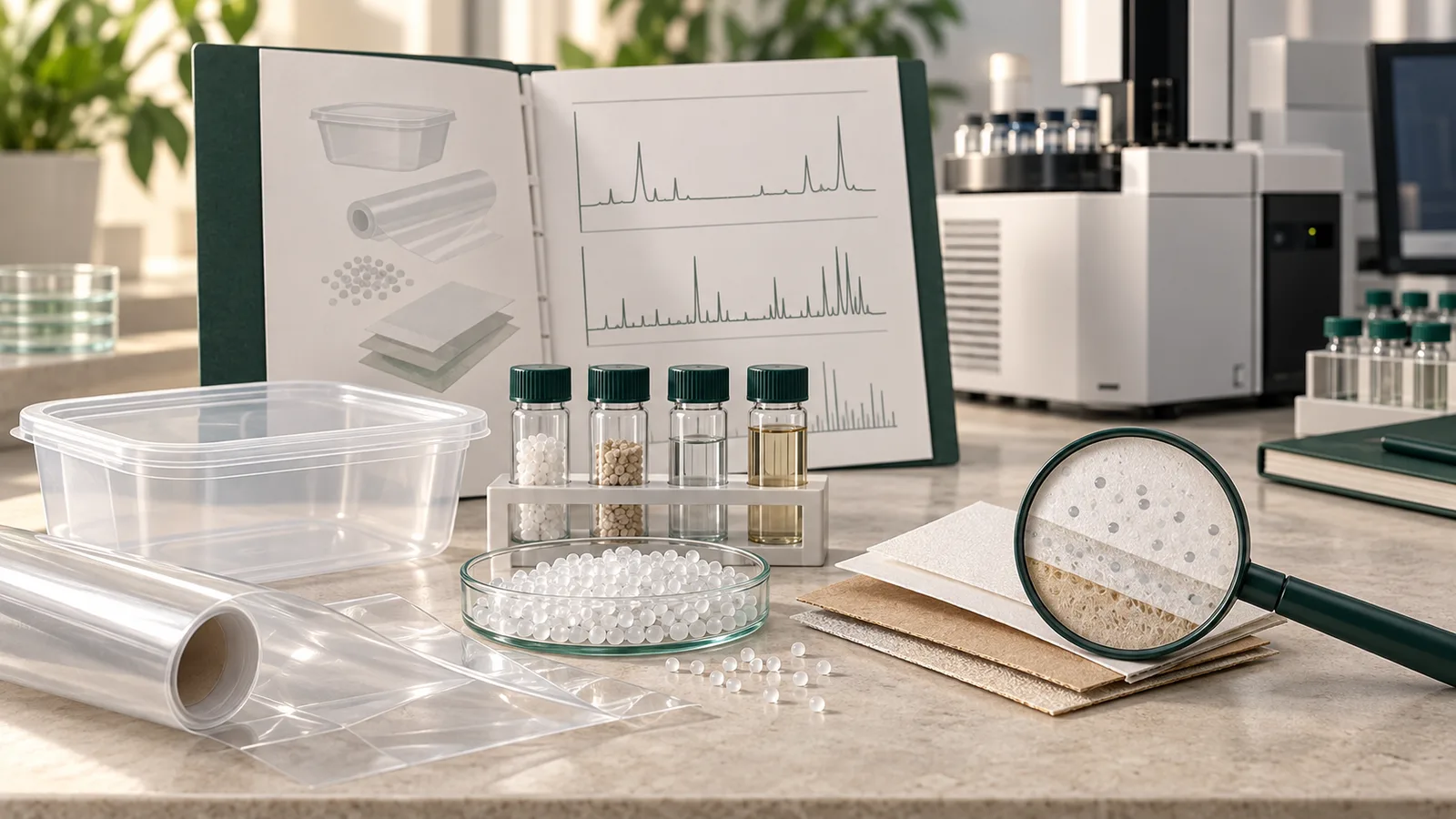
NIAS sits outside the familiar positive-list mindset
Packaging teams are often more comfortable discussing substances that were intentionally selected for a material. NIAS changes that perspective because the relevant substances may come from reactions, impurities, degradation or recycled inputs rather than from an ingredient chosen for a direct technical purpose.
The source can appear at several stages of the packaging life cycle
NIAS may arise during polymer production, printing, lamination, conversion, repeated use or material aging. In recycled or multi-component structures, the question can become even more complex because several process histories may influence what needs to be considered in the review.
Product structure matters more than a general reassurance
A broad statement that a packaging item is suitable for food contact does not explain much if the material build, layer combination and intended use are unclear. NIAS assessment becomes more credible when the company can connect the risk review to the exact structure being marketed.
Risk review depends on use conditions as well
Heat, fatty foods, repeated contact, storage time and other operating conditions can influence how a packaging team interprets NIAS relevance. The same material family may not raise the same questions in every application, which is why intended use should sit alongside material description in the file.
Documentation has to support the reasoning
The practical challenge is often not only identifying NIAS as a concept, but showing how the company reviewed it through supplier information, production knowledge, product specifications and other supporting records. When that chain is weak, later questions become difficult to answer consistently.
NIAS control is mainly about better product-level review
For most businesses, NIAS does not point to one universal conclusion. It points to the need for a more careful review of material structure, use conditions and supporting records so the packaging file reflects how the product is actually made and used.