
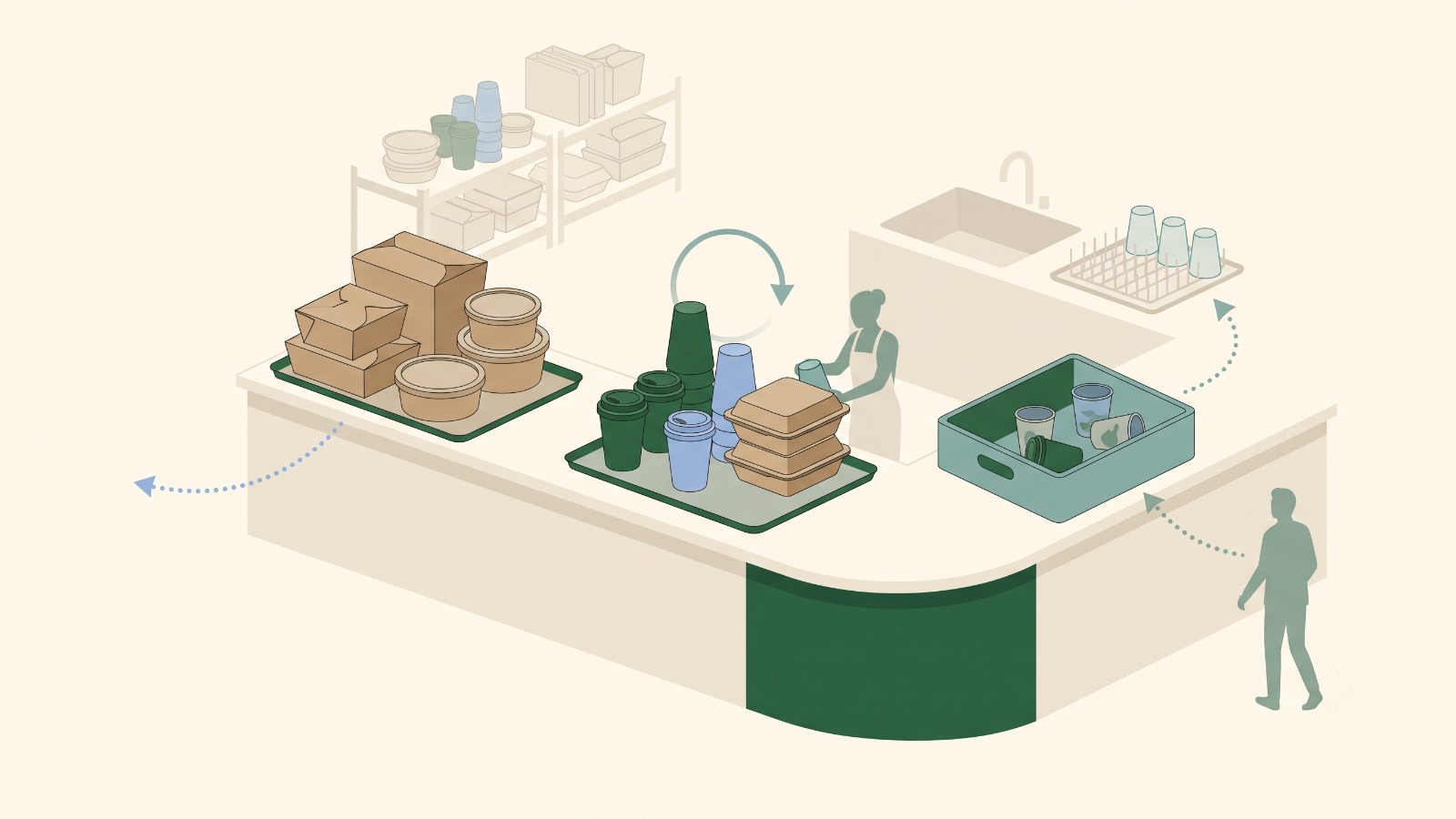
The issue is operational, not only regulatory
For foodservice businesses, single-use restrictions and deposit-return systems are not abstract policy topics. They affect which formats remain practical, how service counters operate and what customers need to understand when packaging is collected, returned or replaced.
Not every packaging format is affected in the same way
On-premise service, takeaway, beverage packaging and small accessory items do not sit under the same operational logic. Companies usually need to separate where reuse is realistic, where return handling is possible and where another packaging model may be more workable.
Deposit systems require handling capacity as well as packaging choice
A deposit scheme is not solved only by selecting an eligible container. Collection points, storage, counting, hygiene procedures, partner systems and staff routines all influence whether the return model can function smoothly in daily service.
Supplier readiness matters early
Foodservice operators are in a stronger position when suppliers can explain which formats support reuse, which products fit deposit-return requirements and what documentation or service conditions apply. Late supplier conversations often leave too little time to adapt operations well.
Customer communication has to be simple and usable
Even a technically sound packaging system can fail in practice if return rules, deposit values or reuse expectations are unclear. Instructions should be easy to follow at the point of sale and realistic for the customer journey rather than written as a policy note.
Earlier preparation reduces disruption later
The most useful preparation is to review exposed formats, operational constraints and supplier options before new obligations feel immediate. That gives foodservice teams more room to test alternatives, train staff and avoid rushed packaging decisions under pressure.