
PPWR affects restaurants through purchasing decisions
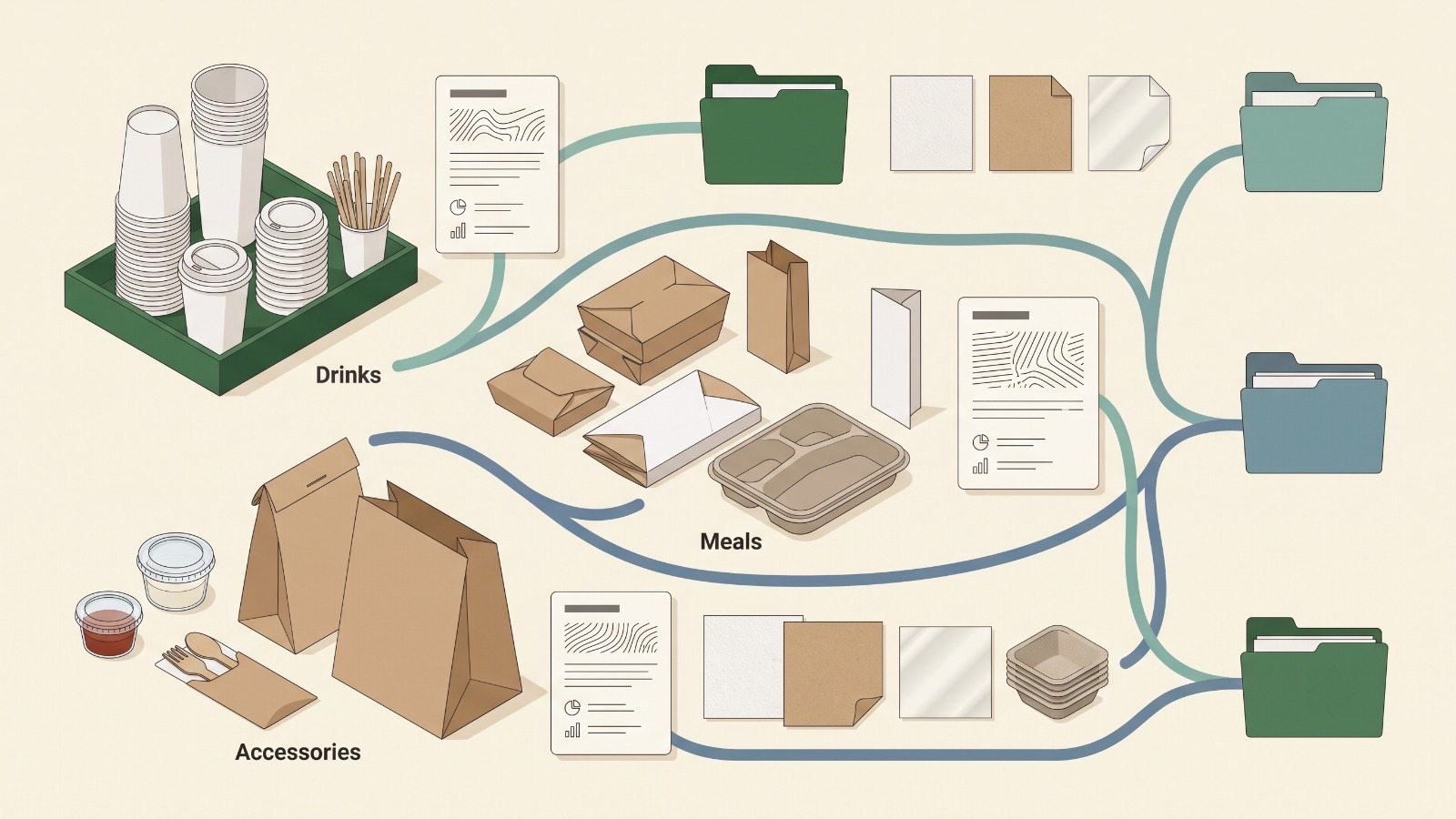
Restaurants often associate packaging regulation with manufacturers and importers, yet the impact also reaches foodservice operations through daily purchasing choices. The practical question is not whether every item must change at once, but which formats deserve earlier review because they carry more uncertainty.
Materials do not create the same level of exposure
Plastic lids, treated paper containers, coated wraps and simple dry-food formats do not all raise the same questions. Material structure, surface treatment and whether the item is designed for direct food contact usually matter more than a broad category label on its own.
Actual use changes the priority
A cup for cold drinks, a box for oily hot food and a sachet used once at the counter do not face the same operational reality. Restaurants usually make better decisions when packaging is reviewed by use case, serving style and disposal route instead of by a generic high-risk table.
Supplier files help separate urgent items from stable ones
Some items become priorities because the supporting file is weak rather than because the packaging format is obviously unsuitable. When declarations, material descriptions and intended-use information are incomplete, procurement teams have less confidence in how the product will stand up to later questions.
Alternatives need to be reviewed with service conditions in mind
Replacing one format with another is rarely only a material choice. Heat, grease, moisture, sealing, stacking and kitchen workflow all affect whether an alternative works in real service, which is why operational testing and document review should move together.
Early review reduces rushed substitutions
Restaurants gain more room to negotiate, compare and phase decisions when exposed formats are identified early. A structured packaging review does not produce one universal answer, but it does make it easier to decide which items can remain stable and which ones should be discussed sooner with suppliers.