
Why packaging choice should start with the food itself
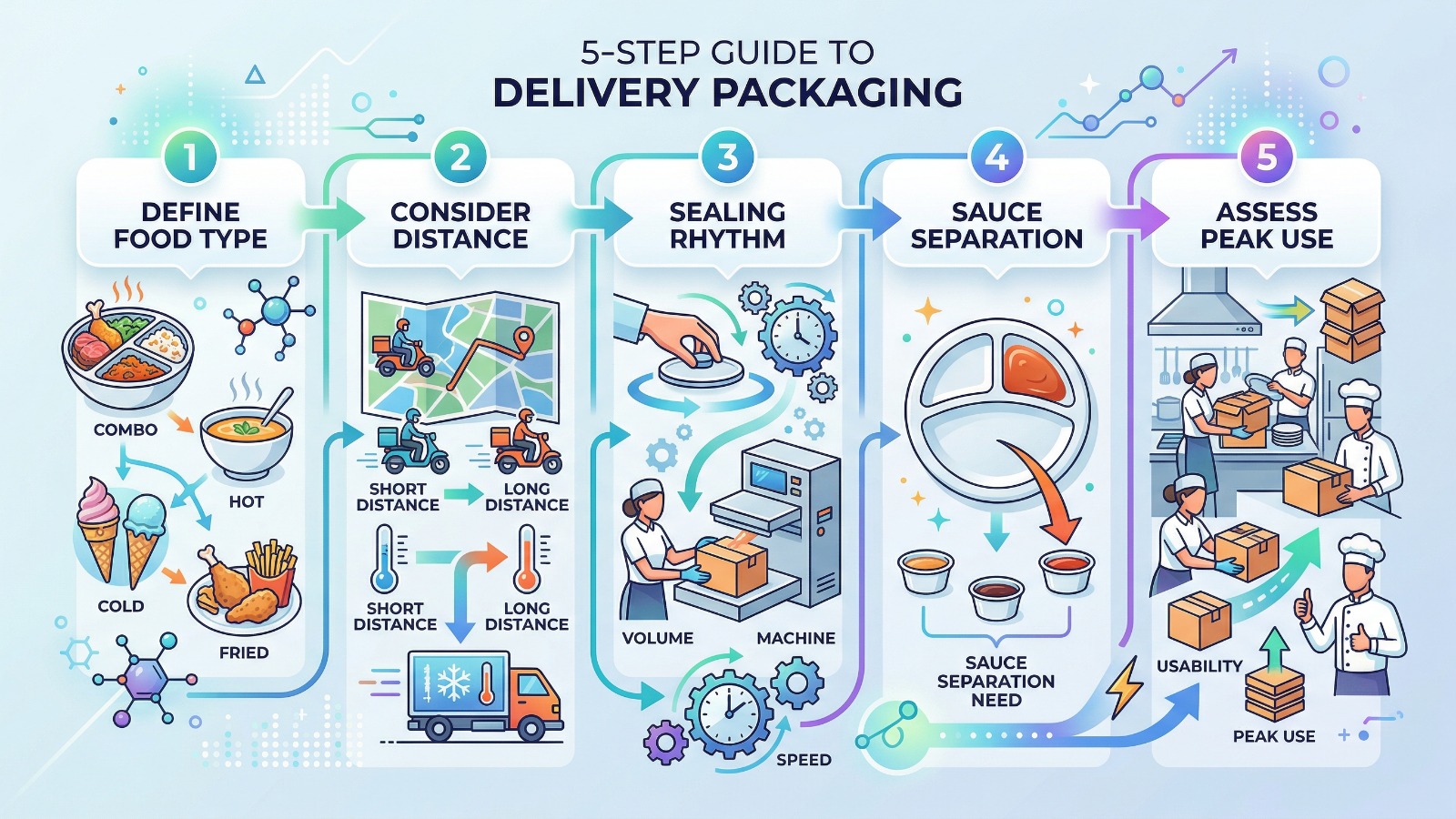
Takeaway packaging usually performs best when the product is assessed from the dish outward, not from the catalog inward. Food structure, temperature, moisture and how the item is eaten all shape which packaging logic will actually work.
Why size and unit price are not enough on their own
A lower unit cost can lose its advantage quickly if the packaging fails during transport or complicates packing. Practical selection has to include sealing, hold time, product protection and how the package supports the customer experience after delivery.
How hot food and soups change the decision
Hot meals and liquid-heavy items usually need stronger attention to heat tolerance, closure security and condensation behavior. Soups and sauce-rich dishes may also need a different lid fit and structural stability than dry or short-hold items.
Why fried food, salads and sushi follow different logic
Fried food often needs a balance between protection and venting, while salads, poke and sushi depend more on presentation, moisture control and separation of components. The same box style rarely handles all of those needs equally well.
Why drinks add another packaging question
Beverages bring concerns that do not always appear with solid foods, such as lid retention, carrying stability and leakage during movement. Teams that sell meals and drinks together usually need to review how different formats interact in one order flow.
Why kitchen workflow matters as much as the package itself
A container that looks suitable on paper may still slow down the line if it is awkward to fill, close or stack under pressure. Good selection takes the packing process seriously, because labor friction often shows up before customer complaints do.
Why delivery experience should stay part of the evaluation
Packaging is there to support the dish through handling, transport and opening. The most useful selection method is therefore a practical one: match the format to the food, the kitchen process and the delivery reality rather than letting packaging lead the decision on its own.