
Packaging decisions work better when the meal comes first
A container that performs well for one dish can fail quickly for another, even if both are sold by the same business. Packaging choice becomes more reliable when teams start with the food structure, service pattern and delivery conditions rather than with a generic preference for one format.
Hot and oily meals create one set of demands
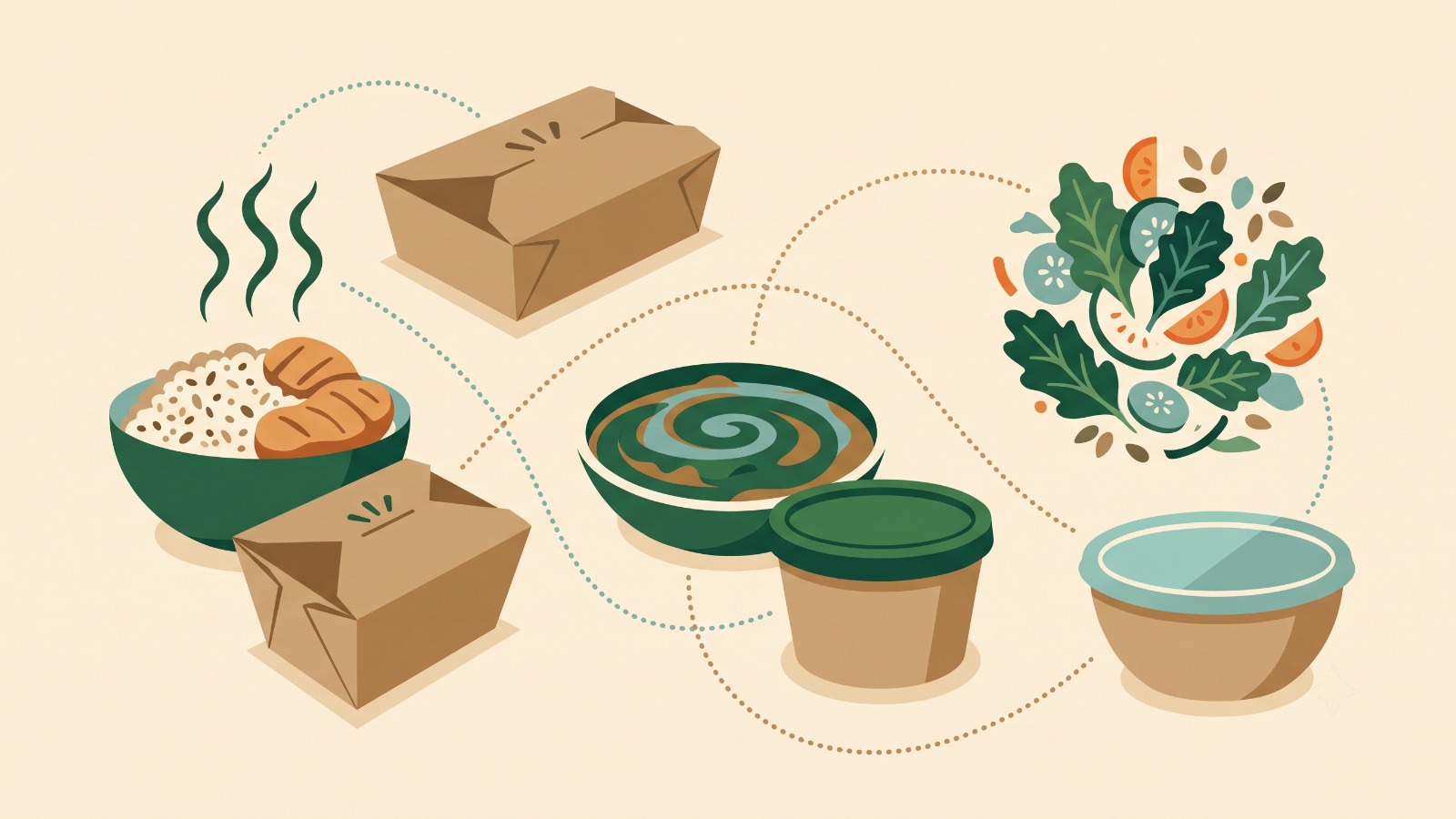
Rice dishes, fried items and other hot meals often need packaging that can handle heat, grease, holding time and stacking without collapsing or leaking. In these cases, the key question is not only material identity but whether the whole structure supports how the meal is filled, closed and transported.
Cold meals and layered dishes create another
Salads, sushi or bowls with visible ingredients may depend more on display, condensation control, ingredient separation and lid clarity. A format that protects appearance and freshness can be more important here than a structure designed mainly for heat retention.
Drinks and liquid-heavy items change the decision again
Soups, sauces and beverages raise obvious concerns about seals, closures and movement during transport. When the product is highly mobile or consumed on the move, the packaging choice is shaped as much by spill control and handling as by the material itself.
Kitchen workflow is part of the packaging logic
A theoretically suitable container can still slow down service if it is awkward to fill, hard to stack or unreliable to close under speed. Foodservice teams usually choose better when packaging is reviewed with the kitchen process in mind rather than treated only as a purchasing line item.
Better selection starts from use, not from abstraction
Food should decide packaging because real meals create real constraints. When businesses compare temperature, moisture, portion structure, transport pressure and service workflow together, the final packaging choice becomes much more rational and easier to defend.