Purity is easier to discuss than to document well
Material purity in food-contact packaging is often described in technical terms, yet the harder task is usually documentation. Companies need to explain not only what the material is, but where it comes from, how it is processed and which records support the packaging item being sold.
Recycled plastic adds another traceability layer
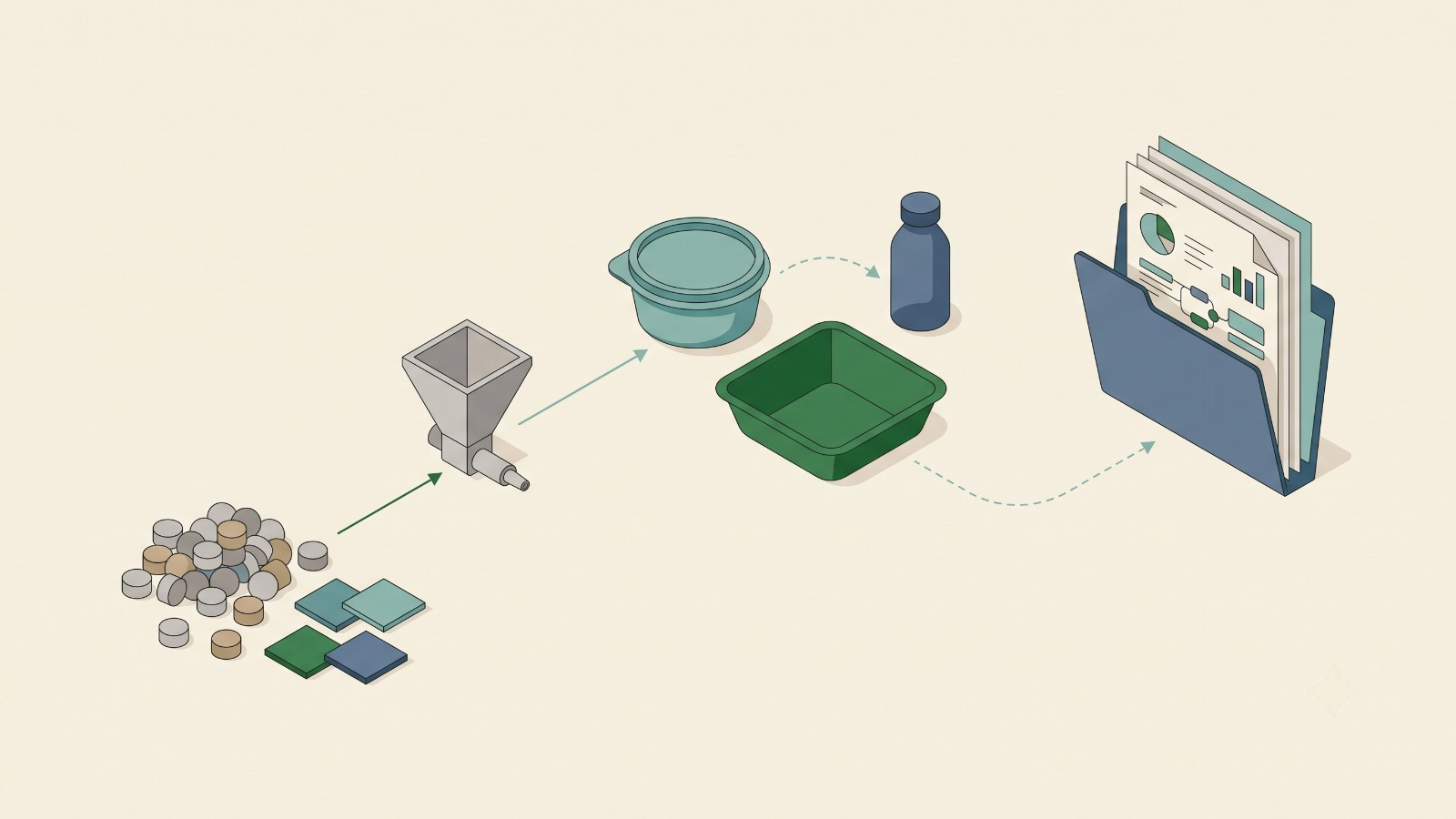
When recycled plastic is involved, source and process history become part of the compliance conversation. A packaging file is stronger when it can connect the recycled input, the process context and the finished product identity instead of presenting those elements as separate fragments.
Product-level linkage matters more than generic statements
A general assurance about recycled material or purity standards is limited if it cannot be tied to the exact commercial article. Product code, supplier file, material description and intended food-contact use should point to the same item if later questions are expected.
Supply-chain records need to remain usable over time
Traceability is not only about storing documents somewhere in the system. The more practical goal is to keep records organized so that procurement, quality and customer-facing teams can retrieve the right information quickly when a batch, material source or supporting file is questioned.
Process control influences confidence in the file
Purity discussions often rely on how well production, handling and incoming material controls are described. A packaging team gains more confidence when supplier communication, process notes and supporting records show a coherent approach rather than a stack of unrelated technical papers.
Better traceability supports steadier market use
For most businesses, the value of recycled-plastic traceability is that it makes the packaging file easier to defend and easier to update. When source information, process logic and product identity stay connected, later reviews become more manageable for both suppliers and buyers.