Sustainability claims are becoming harder to separate from operational reality
Packaging discussions in 2026 are moving away from simple material labels and toward more practical questions. Businesses are increasingly asked whether a format can be used, collected and disposed of in a credible way rather than whether it sounds environmentally preferable in principle.
Reduction still matters because less material changes several outcomes at once
Reducing unnecessary weight, layers or oversized pack formats can influence cost, sourcing, transport and waste together. This is one reason reduction remains important: it often improves packaging efficiency without depending on a more complicated disposal story.
Reuse is growing, but only where the system can support it
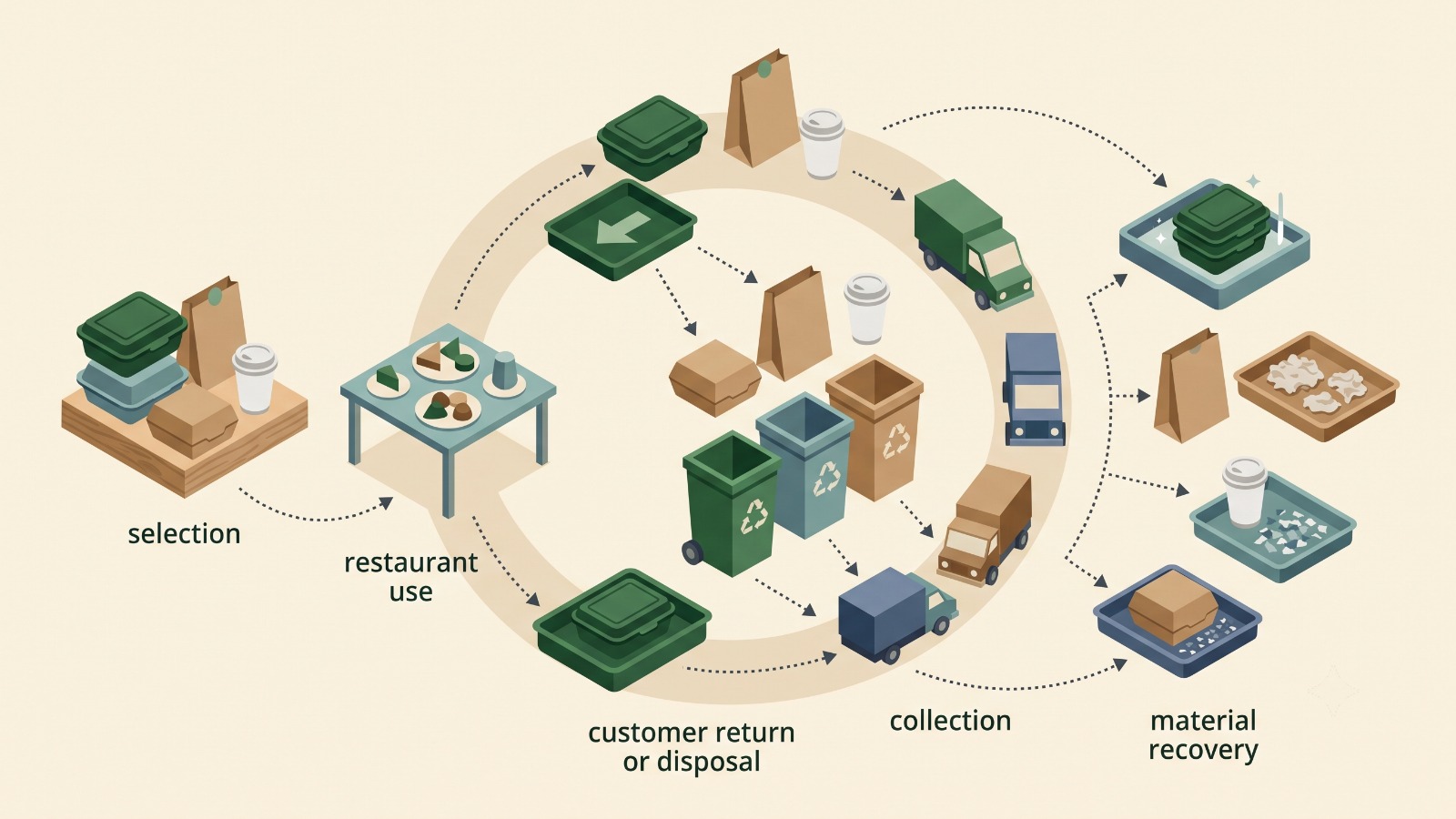
Reusable packaging continues to attract attention, yet the result depends on return handling, cleaning, breakage, customer behavior and operational consistency. Reuse works best where the service model can support it rather than where it is treated as a symbolic upgrade alone.
Disposal routes are now part of the credibility test
A pack is harder to call sustainable if the intended disposal path is weak, unavailable or poorly understood by users. Businesses therefore need to ask whether local collection, sorting, composting or recycling conditions can actually support the claim being made around the packaging.
Clearer information helps customers and buyers make better choices
Material language, disposal instructions and realistic usage notes are becoming more important because they reduce guesswork. Packaging that is easier to understand is also easier to manage across procurement, service operations and end-of-life handling.
The stronger trend is practical sustainability, not symbolic sustainability
What stands out in 2026 is not one miracle material but a more grounded approach. Reduction, reuse and realistic disposal planning matter because they connect packaging claims to what the business and the market can actually carry out.