
Why procurement should start with priorities, not panic
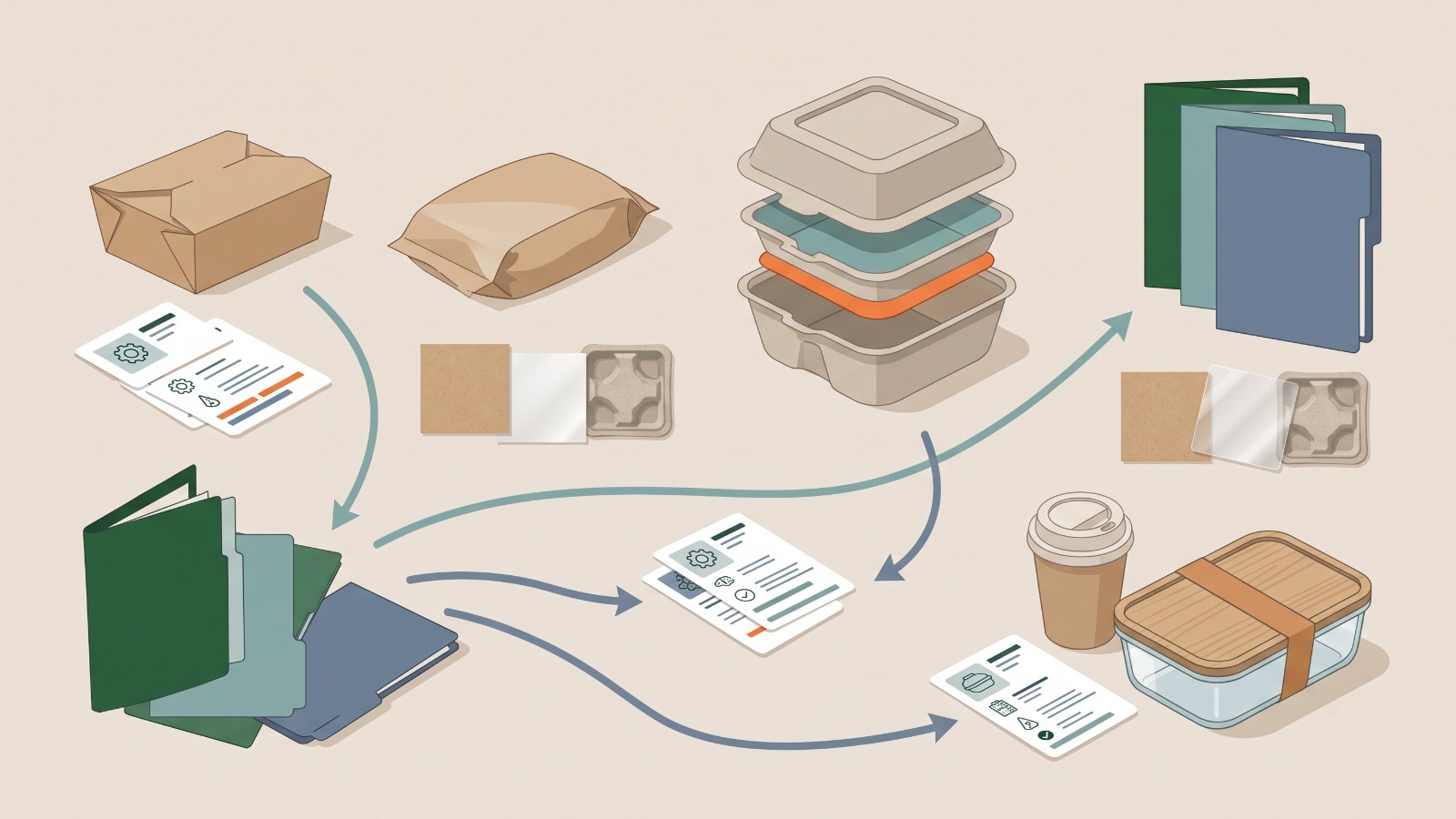
PPWR creates pressure to review packaging choices, but not every item in a portfolio carries the same urgency. Procurement teams usually make better decisions when they sort products by exposure and document quality instead of treating the whole catalog as one immediate replacement project.
Which materials deserve earlier review
Some packaging types move to the front of the review queue because their material structure is more complex or their downstream requirements are less straightforward. Multi-layer formats, coated surfaces and items with added functional elements often need closer attention than simple, well-documented articles.
Why application matters as much as the material itself
The same material can create different questions depending on how the packaging is used. Hot food, greasy food, wet applications, takeaway transport and short-shelf-life service all place different demands on the item and on the supporting file behind it.
What procurement should ask about coatings and functional layers
A structured review should look beyond the visible substrate. Coatings, barrier layers, sealing components and surface treatments can influence recyclability claims, technical suitability and the completeness of the supporting documentation.
Why document quality affects purchasing risk
A product that seems commercially attractive may still slow down approval if declarations, product data and supporting records are vague or outdated. Reviewing document quality early helps teams avoid buying time pressure later into the decision.
How to avoid waiting for the final deadline window
The closer a company gets to a hard implementation date, the less room remains for supplier clarification and alternative evaluation. Starting with the most exposed product groups gives procurement teams time to correct gaps while choices are still manageable.
Why a structured review is more useful than a fear-driven reaction
PPWR work becomes easier when companies define a calm review order based on material, use case and file quality. A focused first pass usually creates a clearer picture of where changes are truly needed and where the current packaging can remain under better documentation control.