The comparison is usually decided by context, not by material labels
Plastic and paper are often presented as if one must always be the more sustainable choice. In practice, the better question is which material structure fits the product, the logistics and the disposal route the business can realistically rely on.
Paper often changes once performance requirements rise
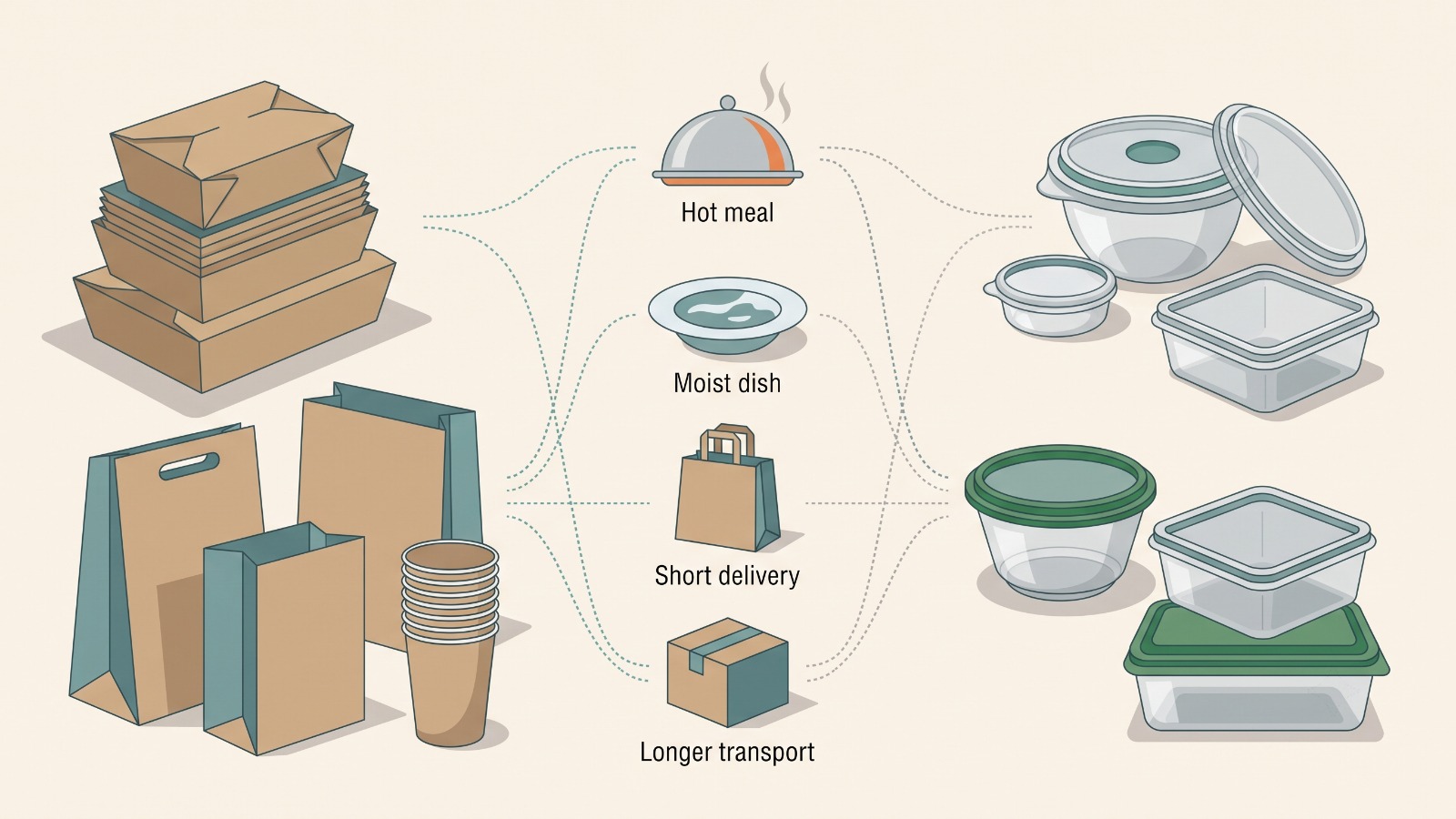
Paper packaging can look attractive because customers understand it quickly and disposal messaging feels familiar. Yet once grease resistance, moisture protection or sealing become important, coatings or additional layers often enter the structure, which can change how straightforward the sustainability claim really is.
Plastic can remain practical in demanding applications
Plastic formats are often chosen because they seal well, resist leaks and handle longer transport or hotter, wetter food more reliably. That does not make plastic the better answer by default, but it does show why performance and food protection still matter when businesses compare packaging options.
Distance and service conditions can change the conclusion
A short local delivery with simple dry food may support one packaging choice, while a longer route with sauces, condensation or stacking pressure may support another. The same business can reach different answers across product lines because the use conditions are not identical.
Disposal claims need a realistic local route
A material is harder to describe as sustainable if the intended recovery or disposal path rarely happens in the market where it is used. Recyclability, compostability and customer sorting behavior should be considered through realistic local conditions rather than through a generic message printed on the pack.
A better comparison asks what the packaging must actually do
The most useful plastic-versus-paper decision usually comes from comparing food protection, structure, transport conditions, disposal route and purchasing constraints together. Businesses make steadier choices when they evaluate the real scenario instead of looking for one symbolic material winner.