
Preparation is more than a slogan
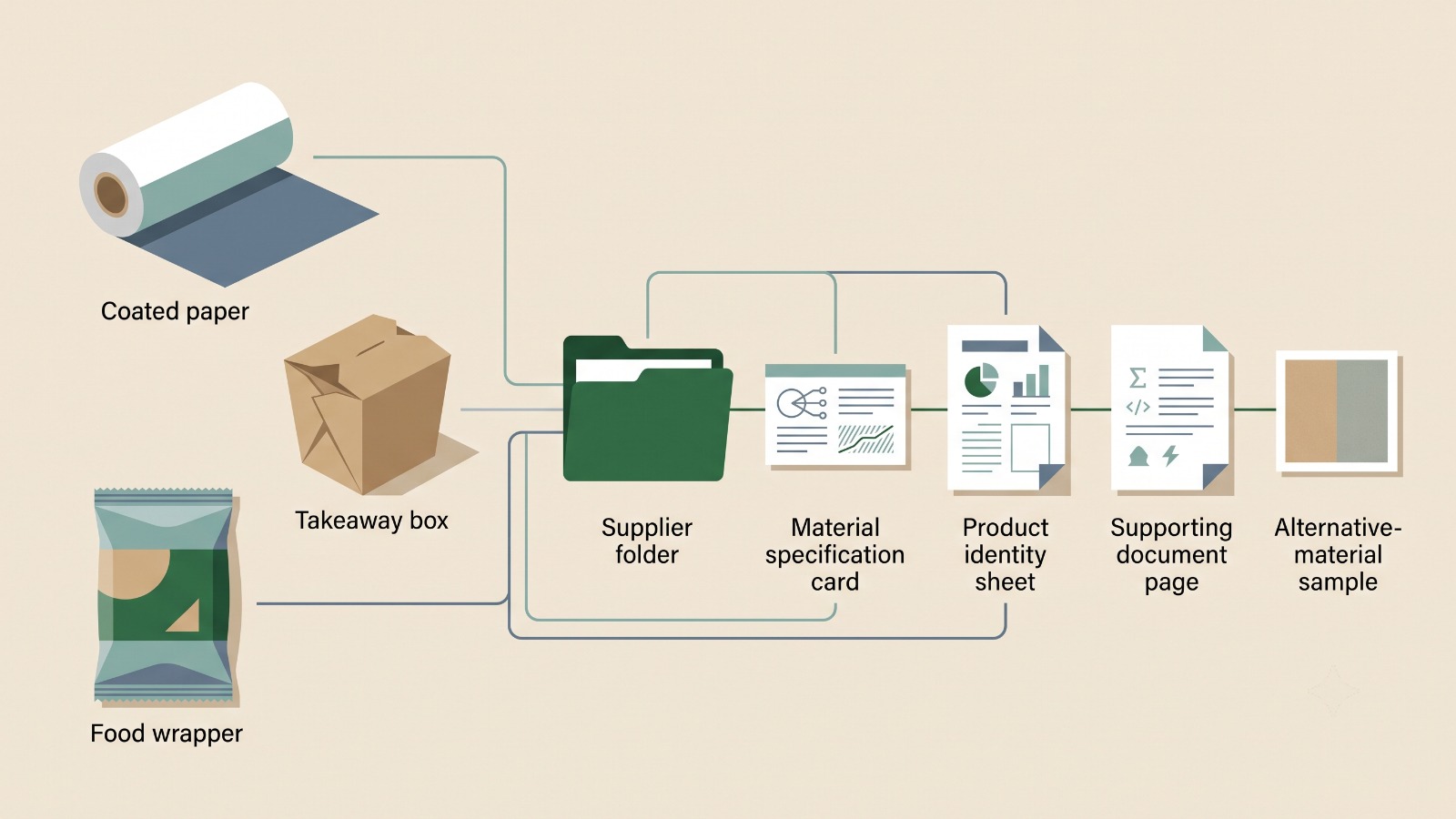
When PFAS restrictions affect packaging, manufacturers often discover that the real work is not a simple message about one material. The stronger approach is to build an evidence chain that explains what the product is, how it is constructed and which records support the intended food-contact use.
Start with product scope and material layers
A portfolio rarely carries the same exposure across every item. Coated paper, treated surfaces, multilayer articles and products assembled from several inputs should be mapped carefully so the review follows the real packaging structure instead of relying only on commercial names.
Declarations need product-level context
Supplier declarations become much more useful when they can be tied back to a specific article, material build and use case. A file is harder to defend when declarations, specifications and labels all use different descriptions for what is supposed to be the same product.
Supporting reports have to match the same item
Reports and technical records help only when they relate to the packaging format actually being supplied. Manufacturers should be able to show how the report, the declaration and the product information refer to the same item rather than creating a patchwork file assembled from nearby examples.
Alternatives need their own documentation path
If part of the range may need a replacement material or treatment, the alternative should not be treated as a last-minute purchasing decision. The substitute structure, its intended use and its supporting records need to be reviewed early enough to avoid a gap between commercial availability and document readiness.
Traceability keeps the file usable
PFAS preparation becomes more practical when product identity, supplier communication, supporting records and internal decisions can be traced through one chain. That does not create a blanket legal conclusion, but it does make the packaging file easier to explain when customers, importers or market authorities ask detailed questions.