
The footprint does not come from one decision alone
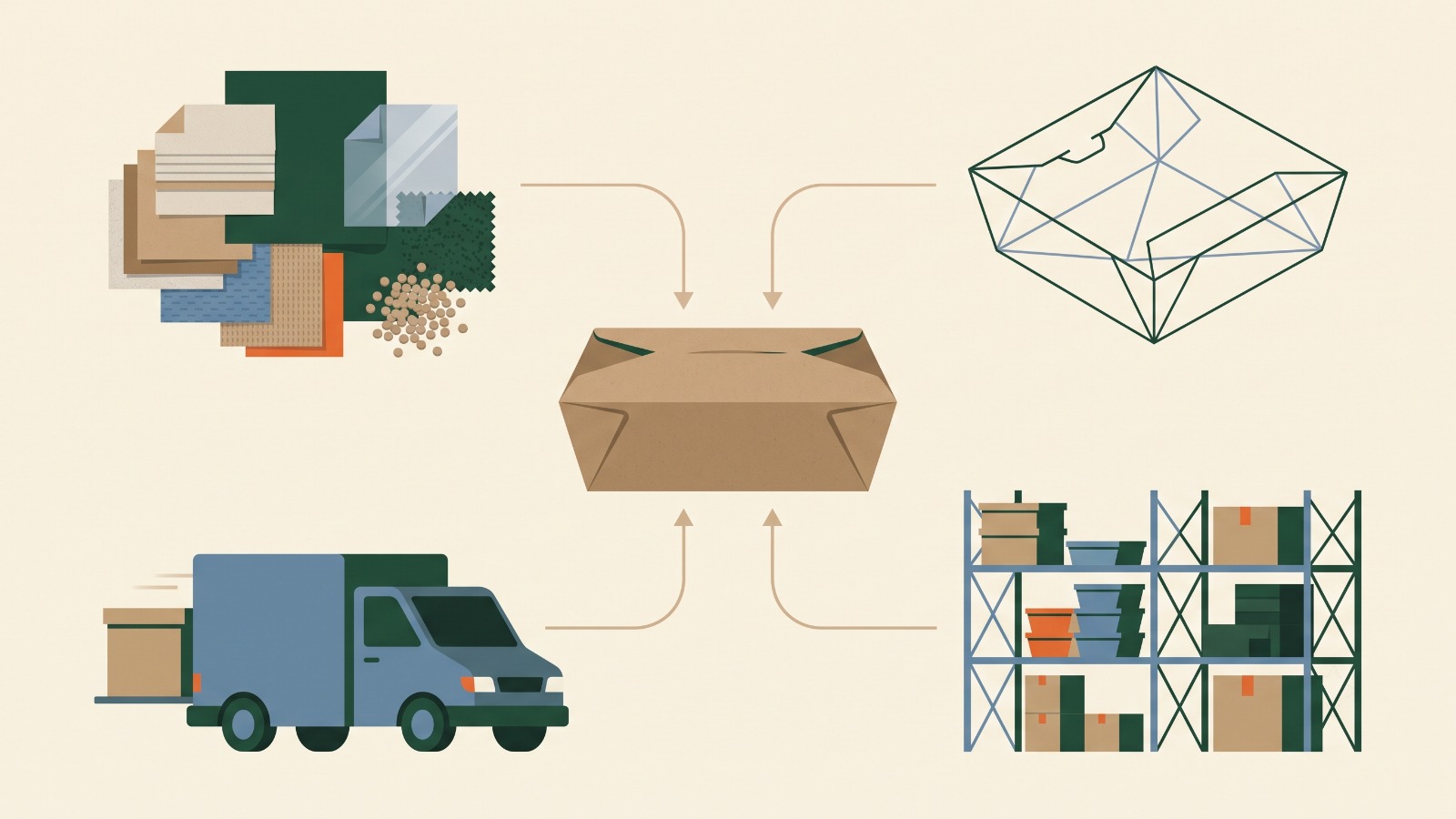
Packaging emissions are often reduced to a debate about whether one material is greener than another. In practice, the result is shaped by a wider set of factors, including pack weight, transport distance, storage efficiency, reuse logic and the disposal route the business expects the packaging to follow.
Material choice still matters, but it is only one part
Paper, plastic, fiber-based composites and reusable formats each come with different production and use profiles. A useful comparison asks how the material fits the food application and whether the broader operating context supports the environmental claim being made around it.
Lighter structures can change the result quickly
Reducing unnecessary weight or layers often lowers emissions without requiring a complete format change. Packaging teams sometimes gain more from simplifying structure, reducing oversized packs or removing avoidable components than from switching materials in name only.
Sourcing and logistics deserve the same attention
Two formats with similar material performance can create very different outcomes once distance, replenishment frequency and warehouse handling are included. Local or regional sourcing can be meaningful, but only when it is considered alongside supply stability and actual product suitability.
Reuse works only when the operating model supports it
Reusable packaging can look attractive on paper, yet the result depends on return rates, washing logistics, breakage and how often the item is realistically used. For some businesses the better next step is a simpler single-use improvement, while others can justify a reuse system with the right infrastructure.
End-of-life assumptions should be realistic
A packaging claim becomes weaker when it depends on a disposal route that is rarely available in the markets where the product is used. Foodservice companies usually make more credible carbon decisions when they compare formats through realistic sourcing, service and disposal conditions rather than one headline metric.