
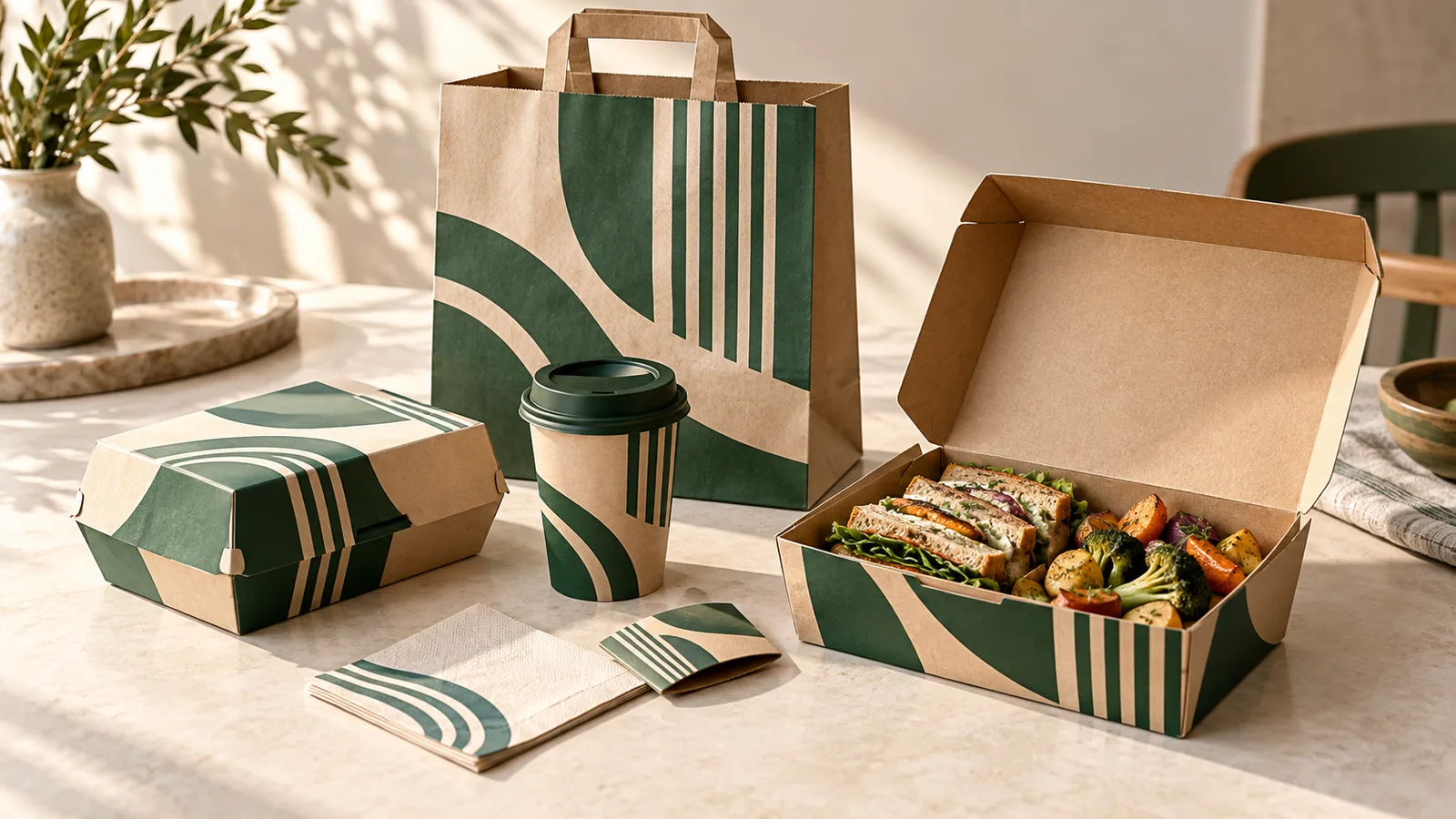
Packaging is often the first physical contact with the brand
For takeaway businesses, packaging is not only a container that moves food from kitchen to customer. It is often the first physical object the customer touches, which means it immediately influences expectations about quality, care and professionalism.
Visual consistency sets the tone quickly
Color, print quality, material feel and how clearly the pack belongs to the brand all affect first impression. A simple format can still look considered when the identity is consistent, while a more elaborate pack can feel careless if the visual language is fragmented.
Opening experience affects how polished the brand feels
Customers notice whether a package opens cleanly, stays stable in the hand and avoids unnecessary mess. A frustrating lid, weak seal or awkward fold does more than create inconvenience; it can make the whole brand feel less controlled.
Product protection is part of the message
Leaks, steam collapse, oil marks and poor stacking quickly undermine the brand promise, even when the food itself is good. Packaging that preserves shape, texture and presentation helps customers read the business as organized and dependable.
Small details influence whether packaging feels thoughtful
Napkins, labeling clarity, sauce separation, reheating guidance or easy resealing can all improve the customer experience without turning the pack into a marketing device. These details matter because they connect packaging performance with everyday usability.
Brand effect comes from operations as much as design
Strong takeaway packaging is rarely only a graphic design choice. The best result usually comes when brand identity, kitchen workflow, delivery handling and packaging structure are designed to support the same experience from dispatch to opening.