One packaging file rarely answers every regulatory question
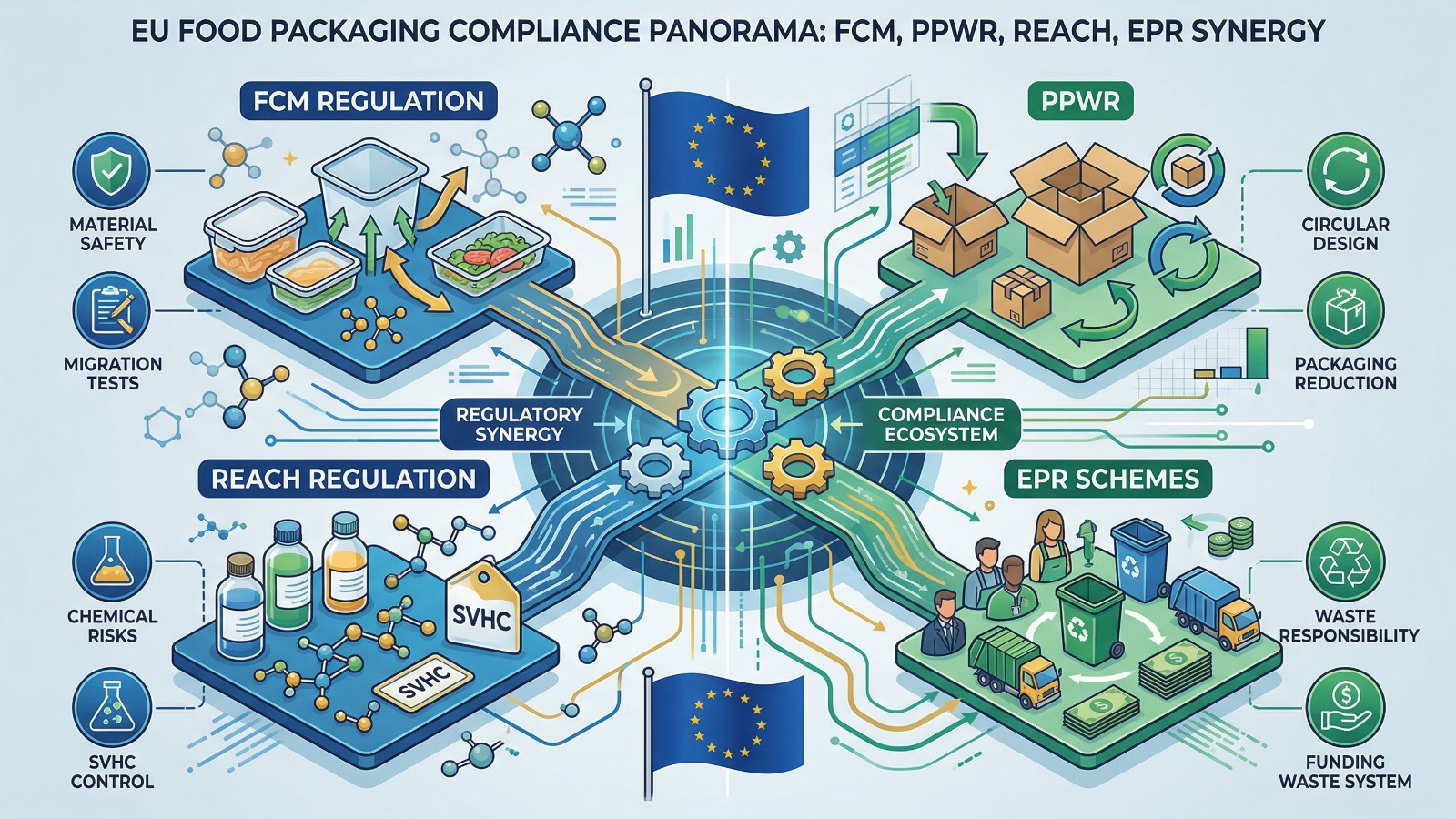
Food packaging compliance is often discussed as if one declaration or one report should cover the whole topic. In practice, different rules ask different questions, which is why companies usually need to separate food-contact suitability, packaging design, chemical review and producer responsibility.
FCM is mainly about product-level food contact suitability
Food-contact rules are concerned with what the packaging is made of, how it is intended to be used and which supporting evidence applies to that exact item. Material identity, declarations, supporting records and use conditions usually sit at the center of this part of the review.
PPWR pushes packaging teams toward design and waste questions
PPWR affects how packaging is evaluated beyond food-contact safety alone. Recyclability, single-use exposure, recycled-content expectations and disposal assumptions all influence which formats may need earlier review from a sourcing and portfolio perspective.
REACH is about substance management, not the whole packaging file
REACH does not replace food-contact documentation or packaging-waste review. Its role is different: companies need to understand whether restricted or reportable substances create obligations in the material set and whether supplier information is clear enough to support that assessment.
EPR follows market placement and responsibility flows
EPR questions often sit closer to the commercial and market side of the business. The issue is not only what the packaging is, but also who places it on the market, in which country, under which reporting and financing responsibilities.
A clearer task split leads to steadier decisions
Companies usually move faster when they stop searching for one universal compliance answer. A better approach is to map which rule affects which task, then connect suppliers, documents and internal owners to the right part of the packaging workflow.