Why every regulation should not be treated as the same task
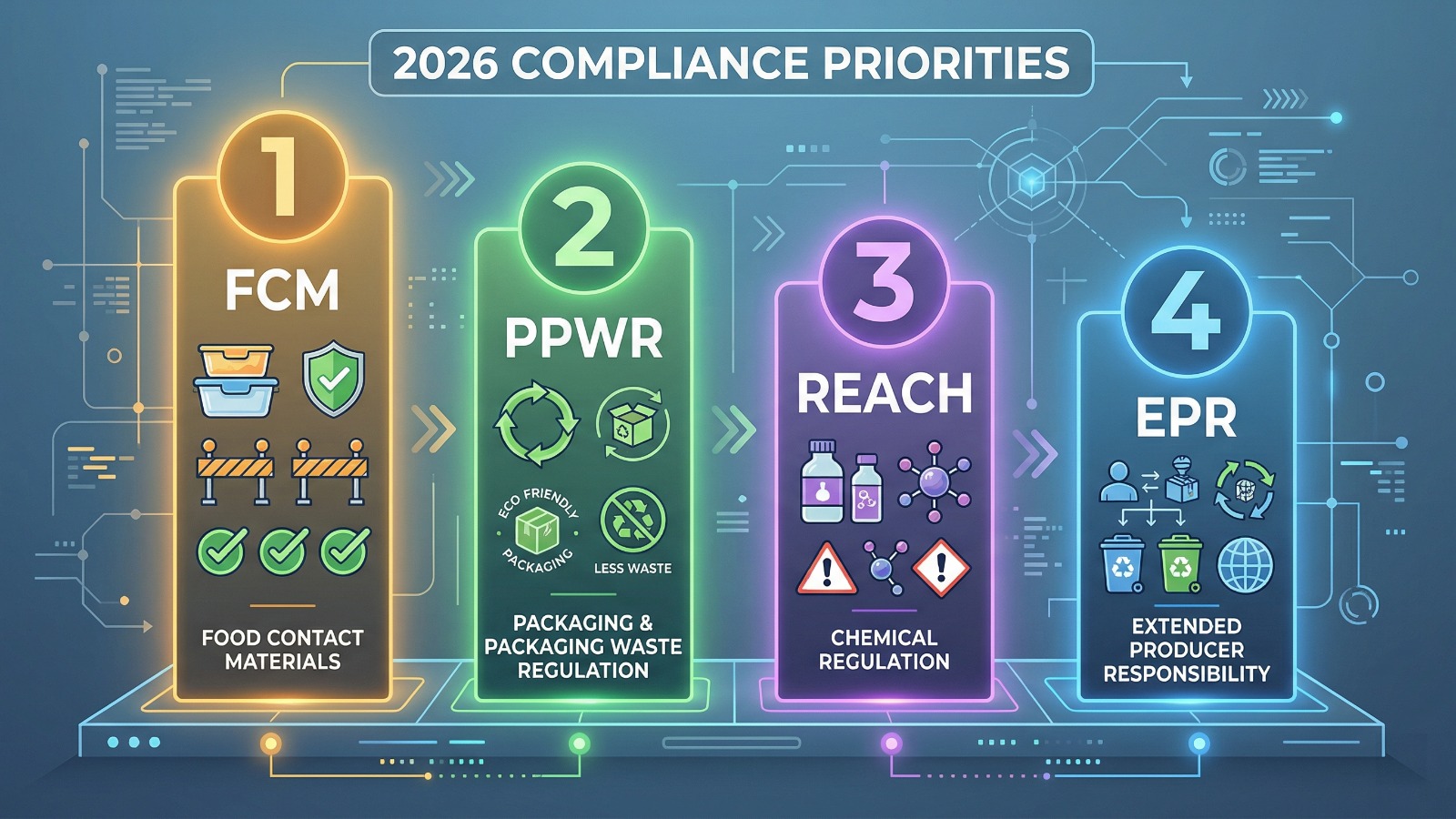
Companies often describe FCM, PPWR, REACH and EPR as one broad compliance topic, but they do not ask the same questions. Progress is usually faster when each topic is connected to the part of the packaging workflow it actually affects.
How food-contact requirements differ from packaging waste rules
Food-contact review is mainly about material suitability, intended use and supporting evidence for safe application. Packaging waste obligations, by contrast, focus more on recyclability, design choices, reporting structures and how packaging is managed in the market.
Where substance restrictions fit into the picture
REACH-related questions often sit closer to material composition, restricted substances and supplier communication than to day-to-day packaging purchasing alone. They should be tracked in a way that allows teams to connect substance information back to the exact product and supplier file.
Why producer responsibility should be organized separately
EPR responsibilities depend on market role, country setup and the way packaging is placed on the market. Keeping that workstream separate from food-contact documentation helps teams avoid mixing legal responsibility questions with technical product suitability questions.
Why supplier information should be sorted early
The longer documents, declarations and market-role information remain mixed together, the harder it becomes to see where the real gaps are. Early organization creates a clearer base for purchasing, quality and commercial teams to work from the same file set.
How companies can build a more practical review order
A useful review order usually starts by separating product safety documents, packaging design obligations, substance-related supplier information and market responsibility files. Once that structure is in place, companies can decide which product groups need deeper attention first.
Why prioritization is mainly an organization issue
In many cases, the biggest improvement does not come from adding more documents at once. It comes from sorting existing obligations into the right buckets so teams know which questions belong to product safety, packaging waste, substance review and producer responsibility.