The update affects more than one plastic rule
Regulation (EU) 2025/351 is not only a narrow amendment for one document set. It changes how plastic food-contact packaging should be reviewed across product composition, recycled-plastic references, manufacturing controls and the records companies keep for market use.
NIAS review becomes harder to treat as a side note
One of the practical shifts is the stronger focus on non-intentionally added substances. Production by-products, degradation products, impurities and recycled-material variables can no longer be treated as background issues if the company is expected to explain how the packaging has been assessed.
Product identity and supporting records need to stay aligned
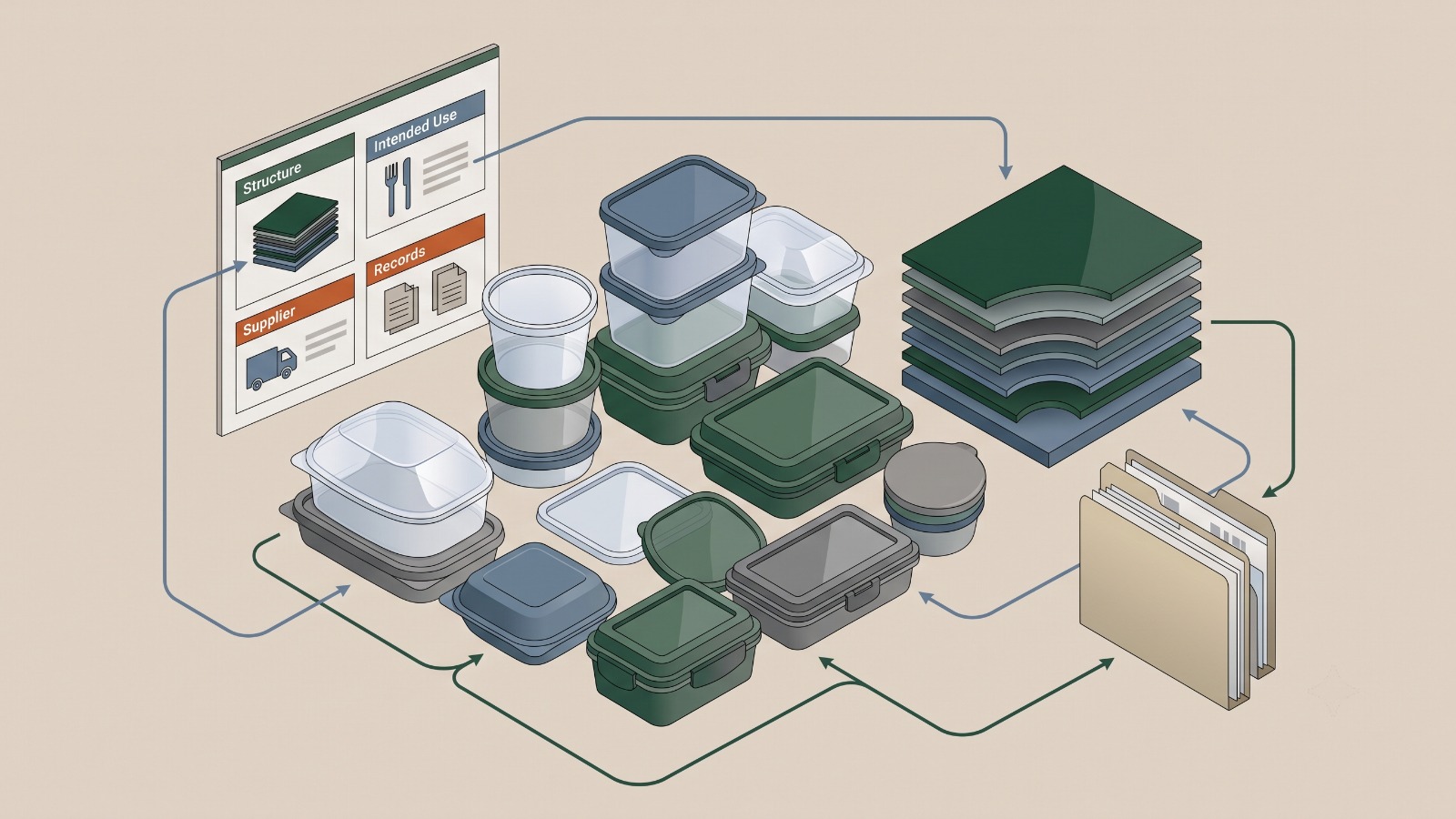
A declaration, a specification sheet and a supporting report are useful only when they clearly describe the same plastic article. Packaging teams should be able to connect composition, intended use, migration conditions and document references back to the exact product being supplied.
Reusable formats need clearer information
Where reusable plastic food-contact items are involved, labeling and instructions become part of the practical review. The question is not only whether the item is reusable in theory, but whether the conditions of use are explained in a way that fits how the product is actually placed on the market.
Transition planning matters before the deadline arrives
The transition period does not remove the need for earlier preparation. Companies usually benefit from identifying which products still rely on older files, which records need revision and where supplier communication is required before the later deadline pressure compresses everything into one task.
The real work is traceable preparation
For most businesses, the regulation is best understood as a documentation and product-review update rather than a headline announcement. When material identity, NIAS evaluation, use conditions and market-facing information are linked properly, later questions become easier to answer.